Nail-Rich Studio — Press-on
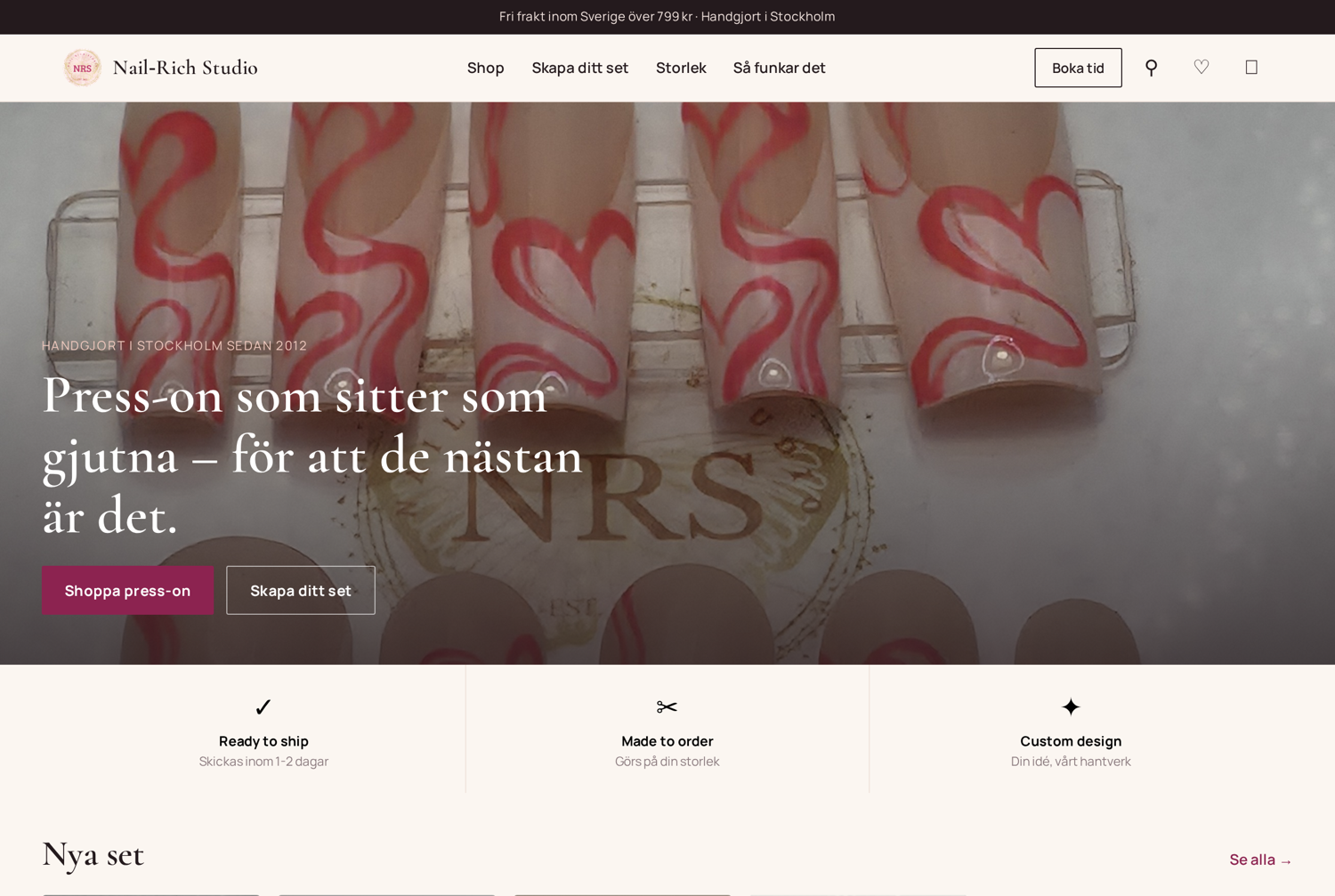
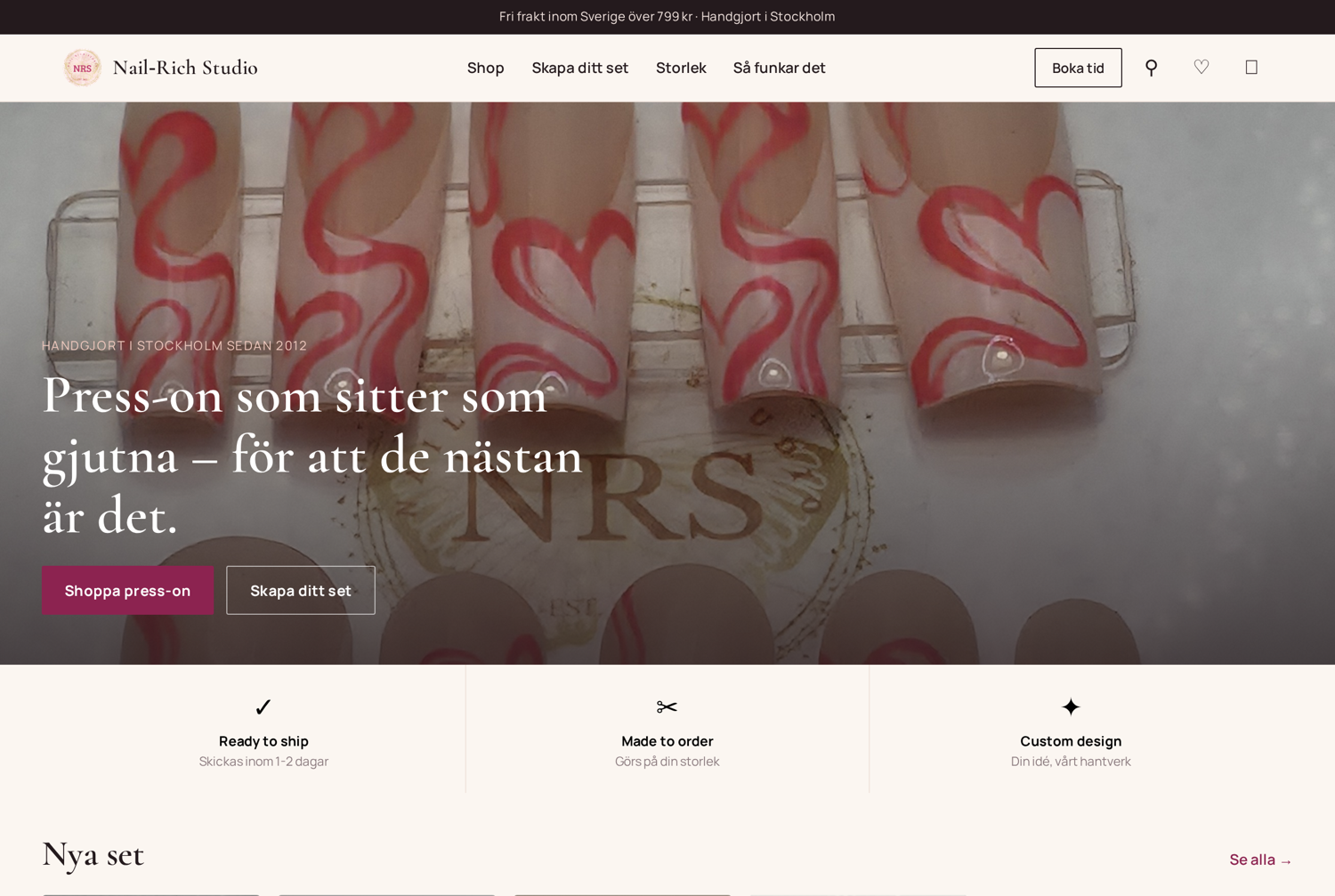
This case study documents how I used an AI-native workflow to design and build a responsive e-commerce experience for Nail-Rich Studio, a Stockholm nail studio with 15+ years of craft. The entire UX process — strategy, research, information architecture, low-fi wireframes, art direction, a design system and a clickable high-fidelity prototype — was created in Claude Design. I then handed the design off to Claude Code, which translated it into a semantic, mobile-first coded site. The project is as much an exploration of the "AI Designer" role — where I direct the strategy, quality and decisions while AI accelerates the production — as it is a shop for press-on nails.
Tools & tech
My role
The assignment
The challenge
Challenge
Solution
Key features
Results
- Carried a full e-commerce project from research to a coded, working site in a single day using a Claude Design → Claude Code pipeline.
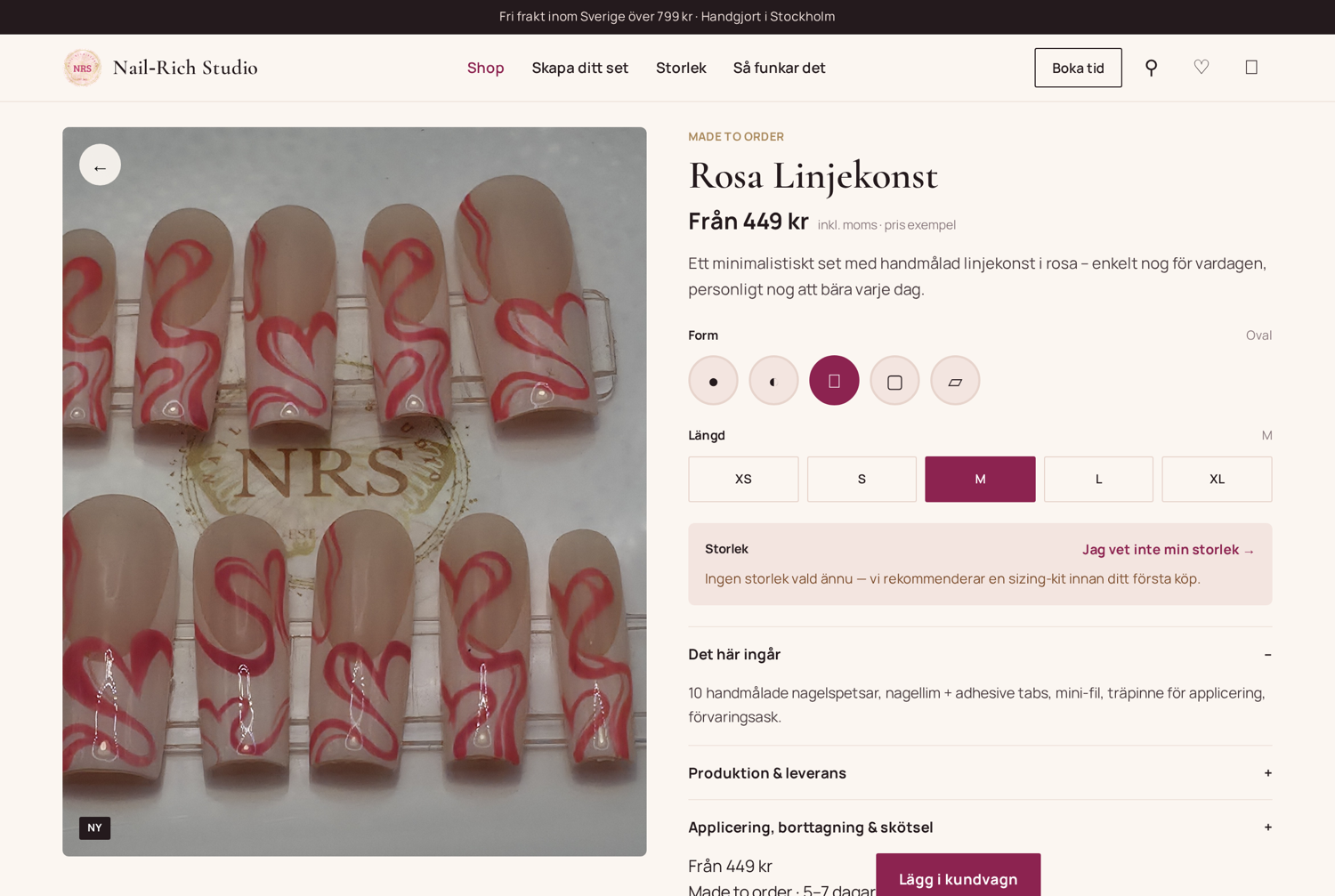
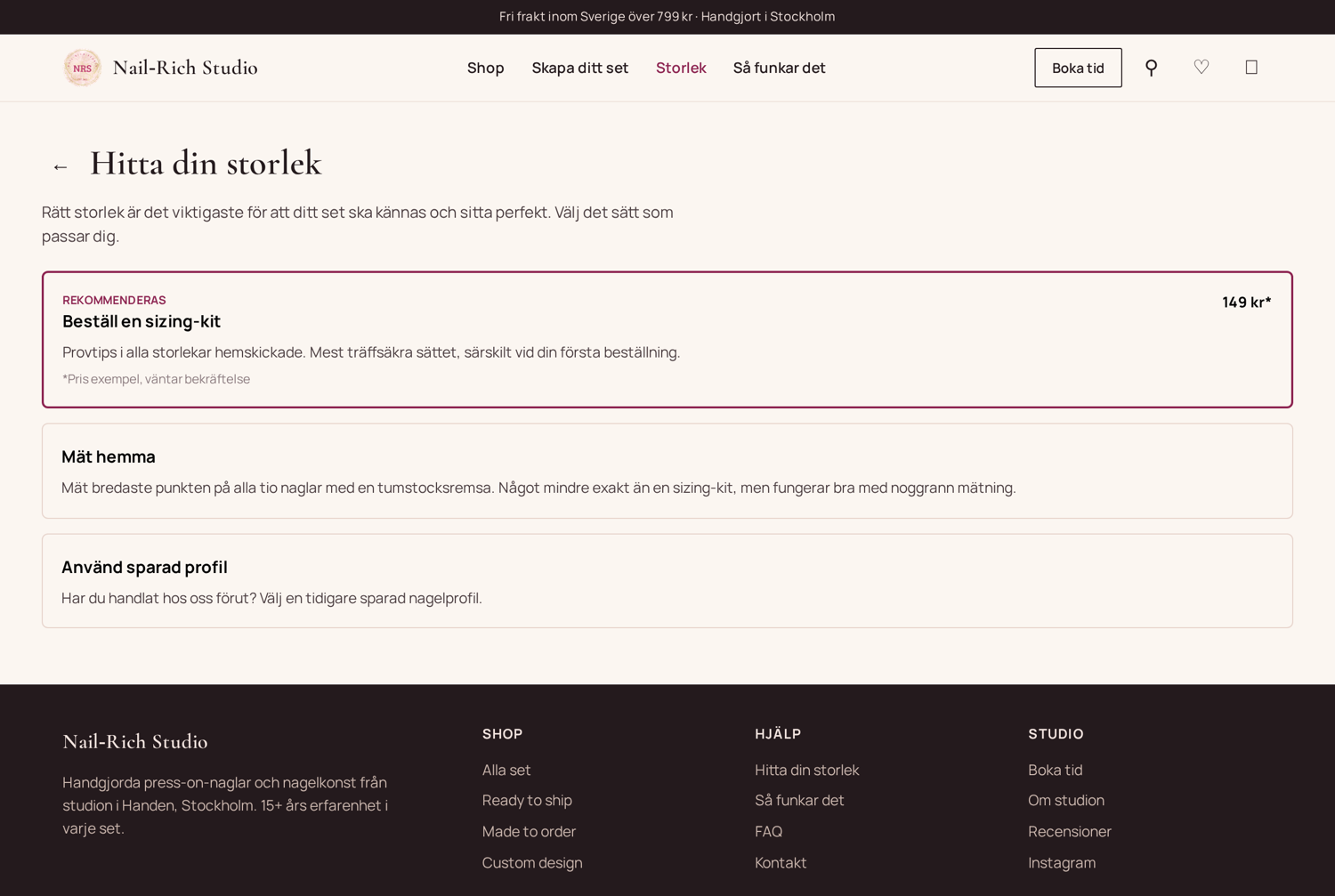
- Designed a sizing-first flow with three non-blocking paths (kit, measure-at-home, saved profile) to reduce wrong-size orders.
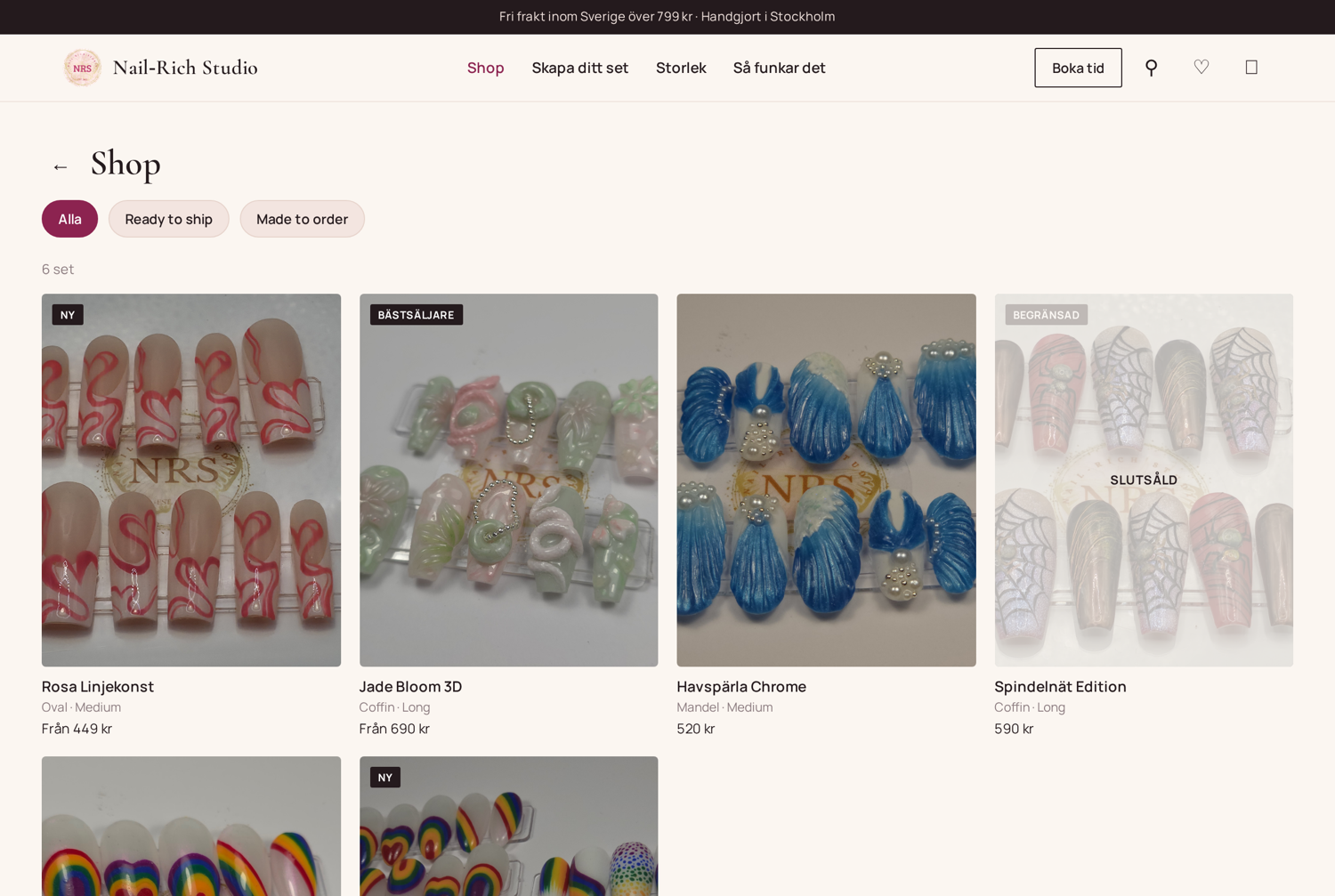
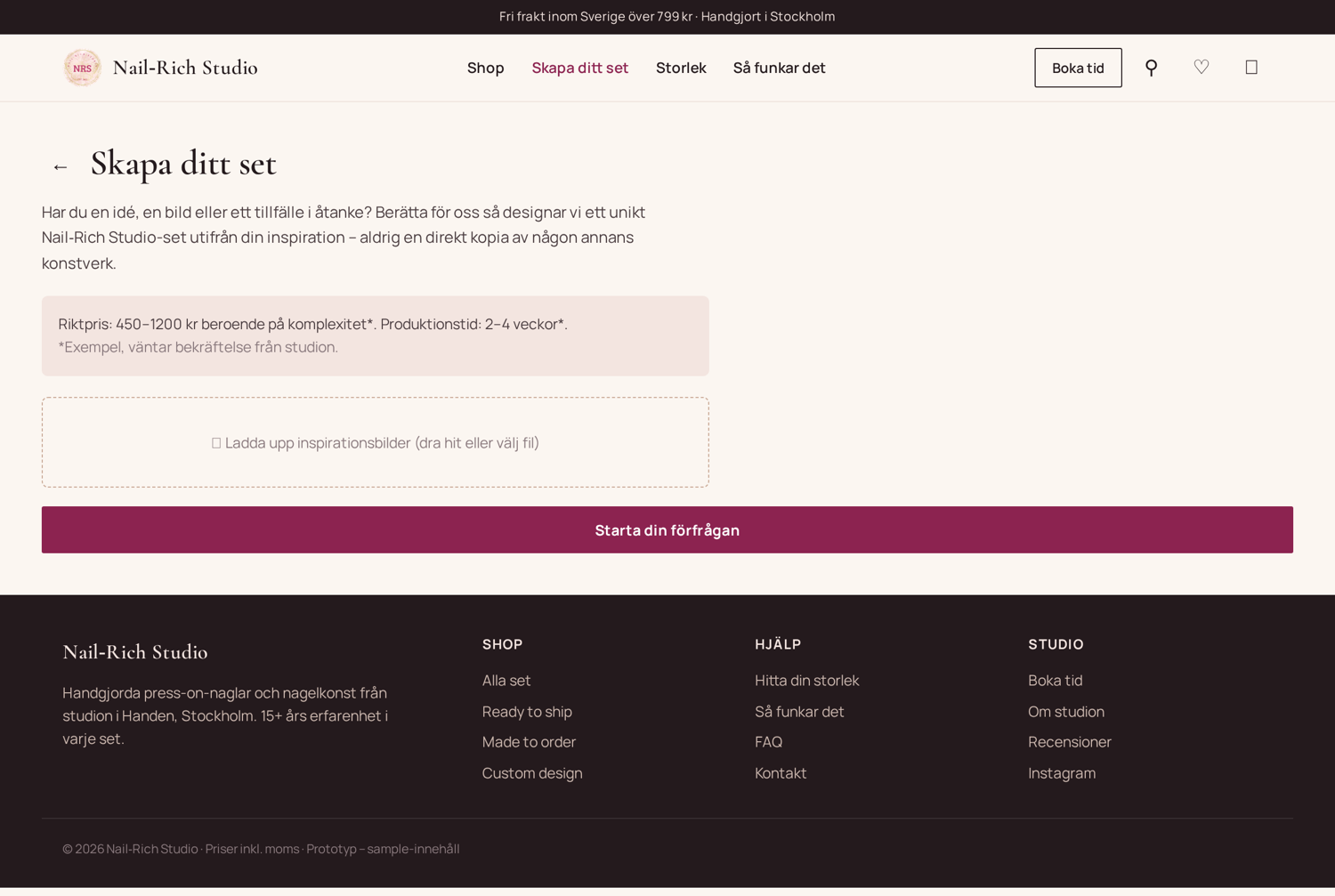
- Delivered a scalable information architecture that cleanly separates ready-to-ship, made-to-order and custom products.
- Kept design and code in sync by sharing the same design tokens, Swedish copy and component structure across both tools.
Screens
Design process
Strategy — Assumptions & research register
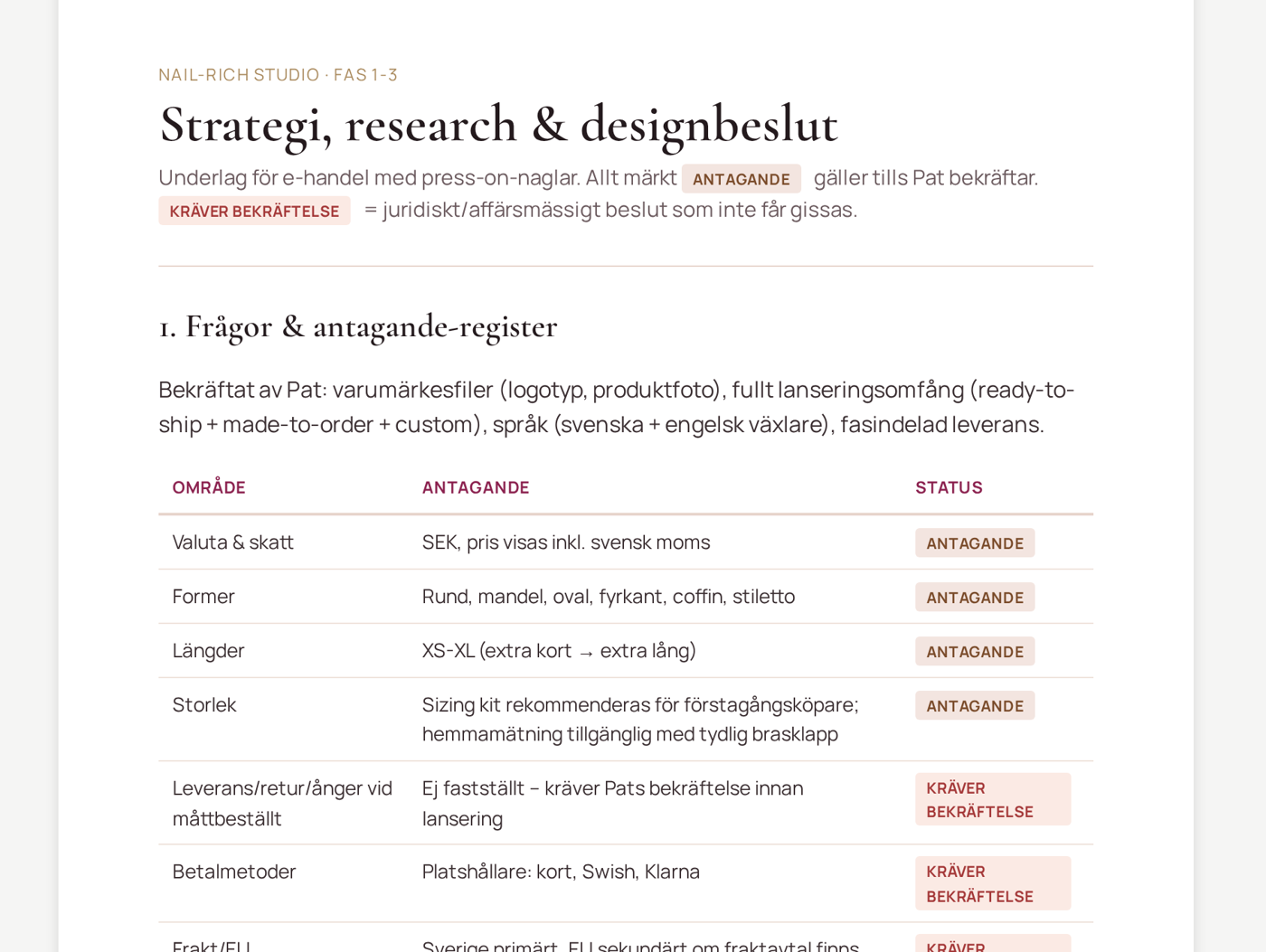
- •Every fact is labelled as confirmed or "needs confirmation", so nothing invented follows the project into production.
Users, Jobs-To-Be-Done & hypotheses
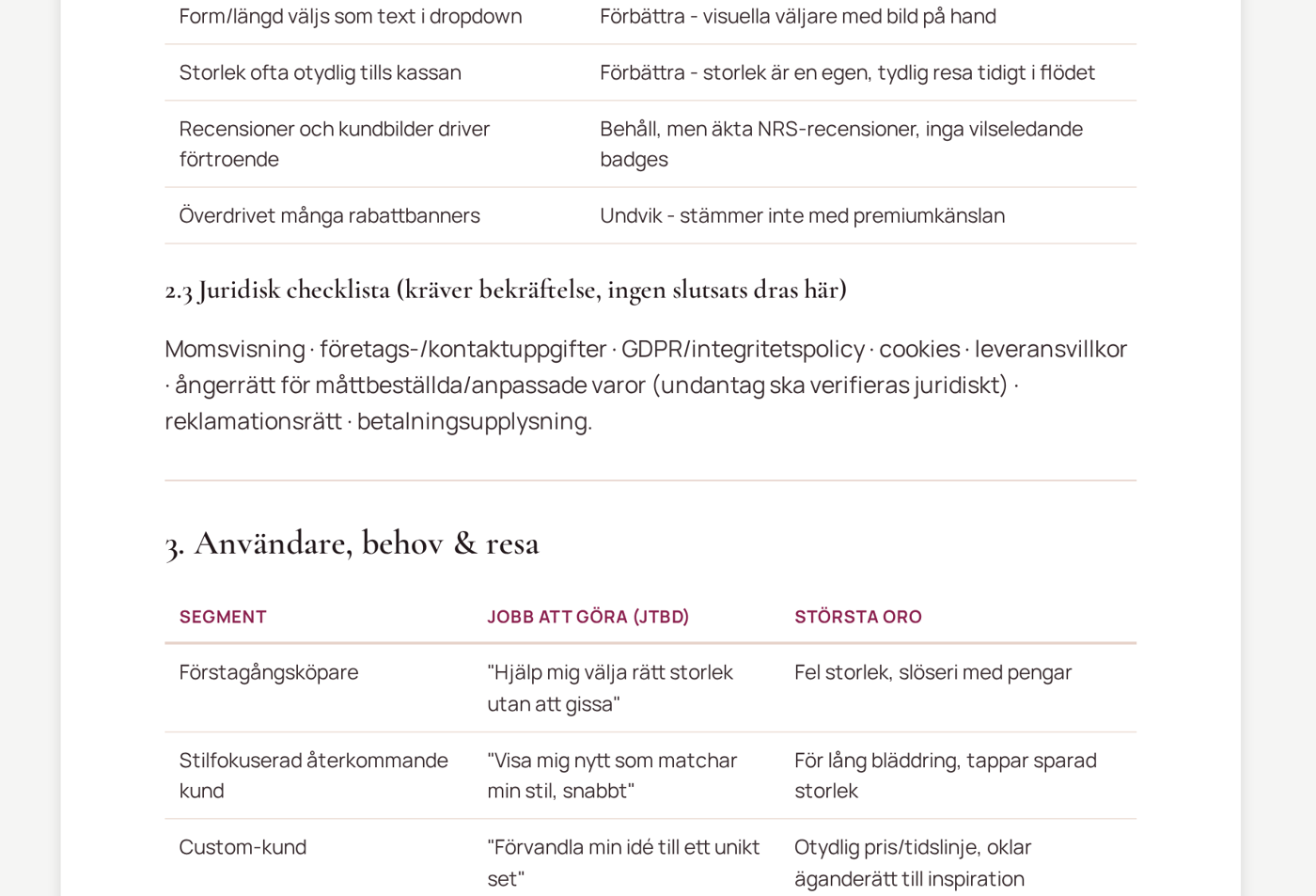
- •Three behaviour segments and testable hypotheses — including that a sizing-first flow reduces abandonment and wrong-size orders.
Art direction — "Editorial Nail Atelier"
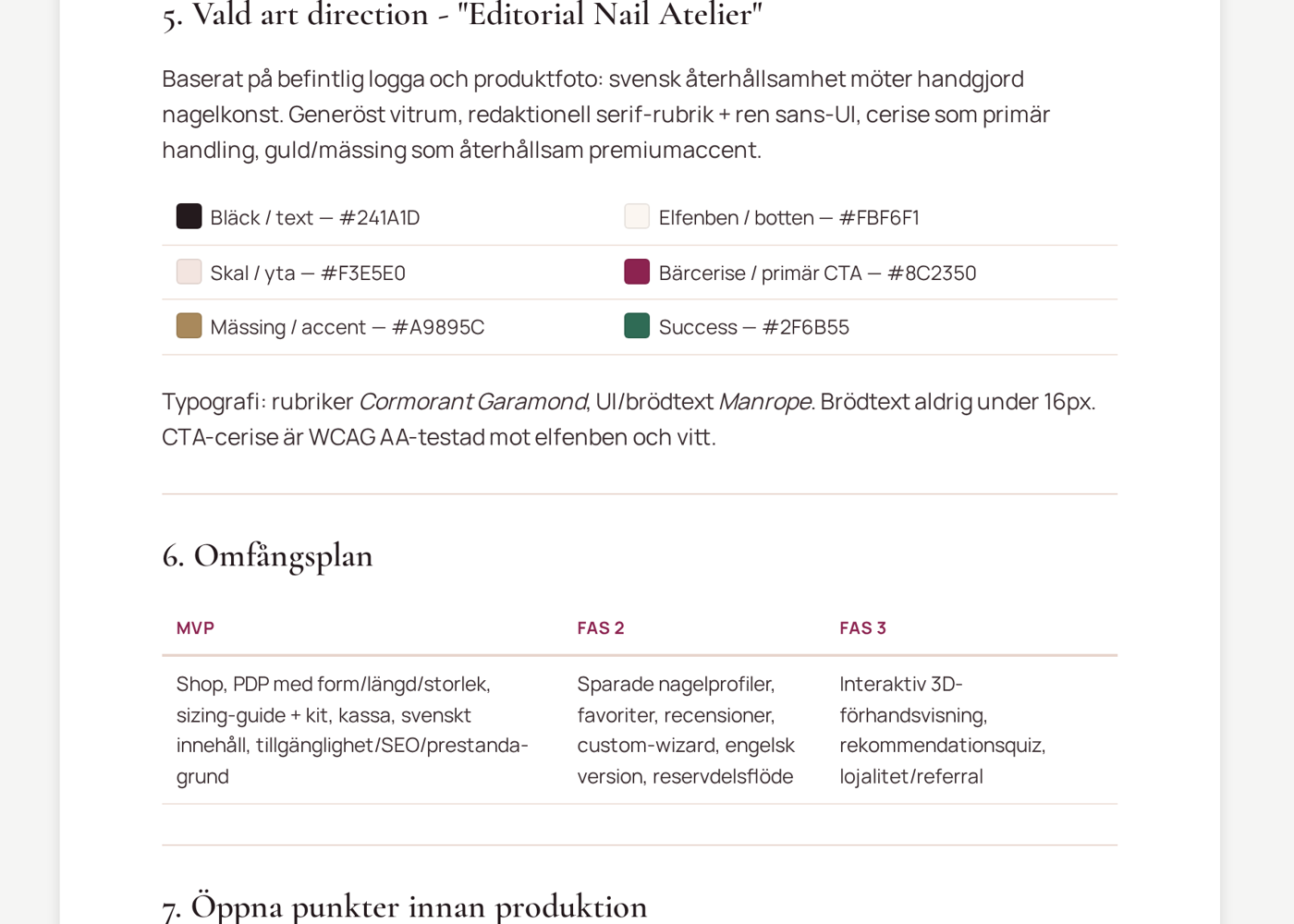
- •A token-based visual system built on the studio's real logo: deep berry, brass and warm ivory, with a phased MVP scope plan.
Wireframes & flows
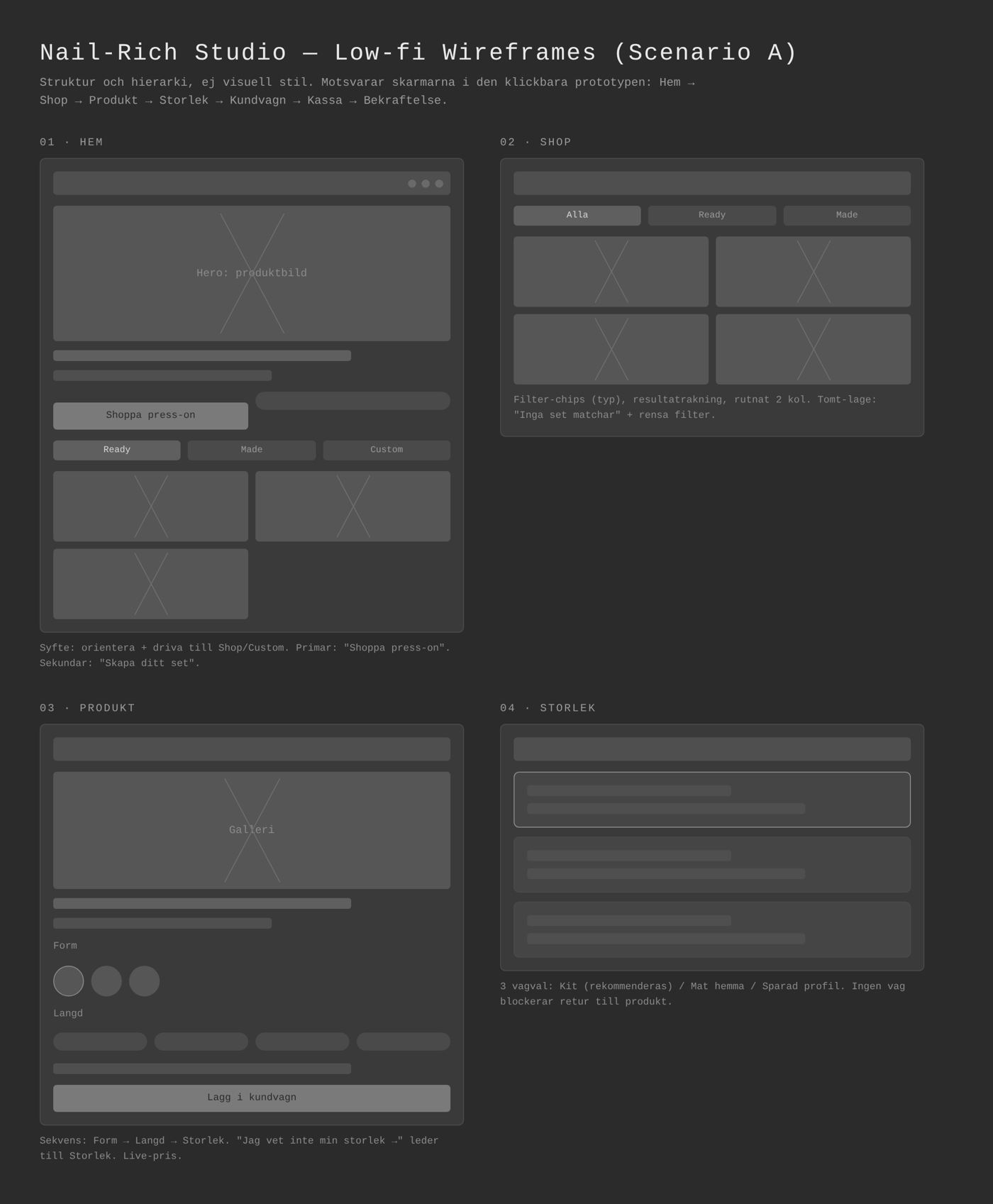
Low-fi wireframes (Scenario A) — structure before style, created in Claude Design.
- •The full first-time-buyer journey mapped as low-fi screens: Home → Shop → Product → Sizing → Cart → Checkout → Confirmation.
- •Sizing gets its own step with three paths, and a rule that no path ever blocks the user from returning to the product.
- •Annotations capture purpose, primary and secondary actions and decision points for every screen before any visual styling.
The AI Designer workflow
Workflow & structure
- •Phased design in Claude Design: I worked in explicit stages — strategy, research, IA, wireframes, art direction, design system, hi-fi and a clickable prototype — instead of jumping straight to screens.
- •Design-to-code handoff: the approved prototype, tokens, copy and component structure were exported to Claude Code, which built the mobile-first site — keeping one continuous chain from idea to running code.
Prompt logic
- •A rigorous brief as the backbone: I wrote a detailed, structured prompt (role, project goal, business context, working rules, phased deliverables) that acted as the single source of truth for the AI team.
- •Iterative refinement: I steered the work in tight loops — feeding in the studio's real product photos, tightening the sizing flow, and reviewing each milestone rather than accepting the first output.
Collaboration
- •AI as a multidisciplinary team, human as director: Claude Design played researcher, IA, UI and design-systems lead, while I owned brand assets, decisions and quality control.
- •Human-in-the-loop review: every phase was checked against real business constraints, with open questions (shipping, payment, returns, exact size chart) explicitly parked for the client to confirm.
Production & delivery
- •Structured handoff package: design tokens, component inventory, Swedish copy deck and a product data model gave Claude Code an unambiguous spec to build from.
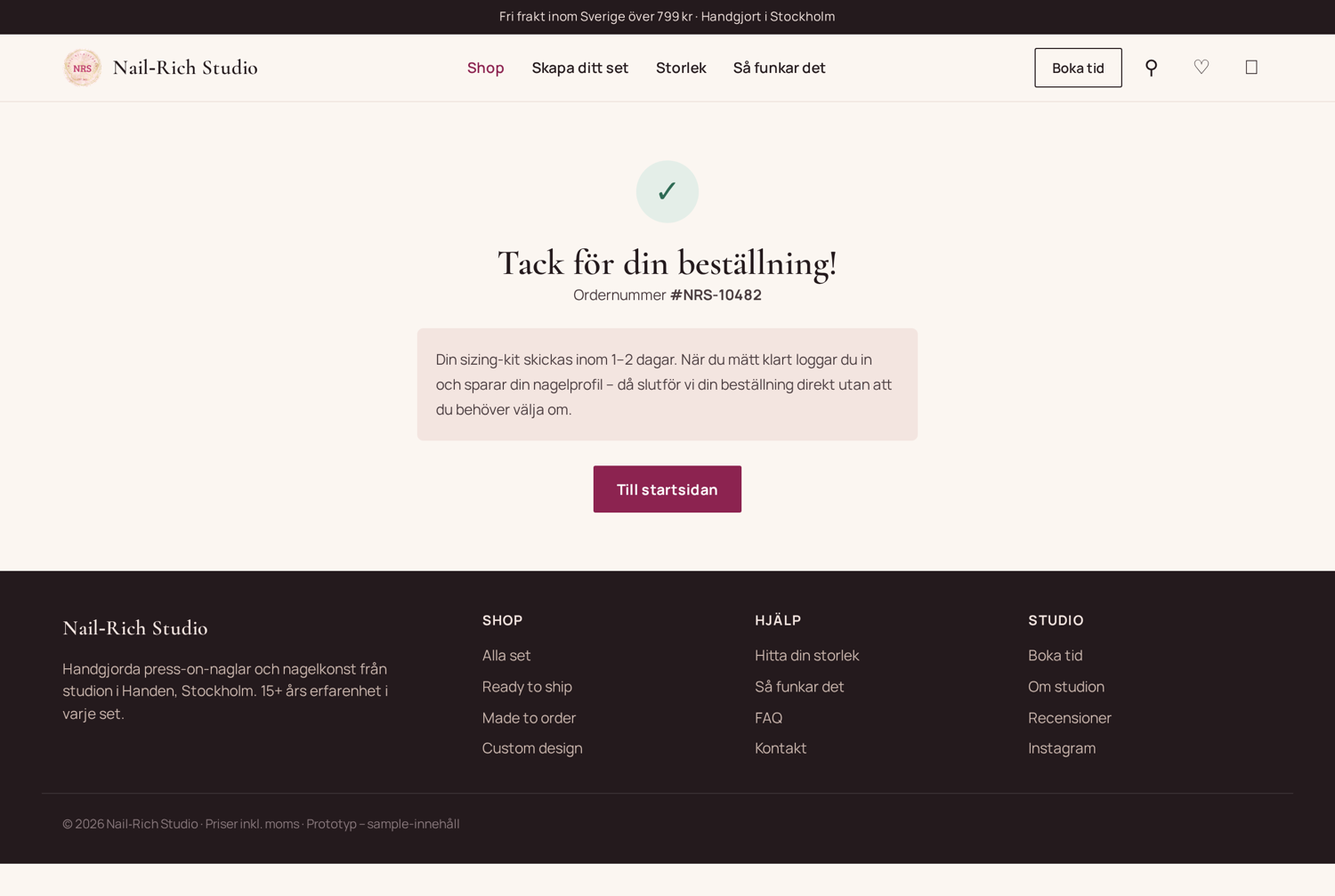
- •Production-minded build: the coded site is semantic and mobile-first, with loading, empty, error and success states and accessibility implemented from the start — not bolted on.
Systems thinking
- •Shared tokens across tools: colour, typography and spacing tokens travelled from the Claude Design prototype into CSS in the Claude Code build, keeping design and code visually identical.
- •Scalable, error-preventing architecture: the IA scales to all three product types, and the sizing-first flow is engineered to prevent the single most costly mistake — the wrong size.
My approach
1. Choosing an AI-native workflow
I deliberately paired two tools to keep one unbroken chain from thinking to product: Claude Design for the entire UX process, and Claude Code for the build. The goal was to prove a single designer can own strategy, design and code without the losses that usually happen at each handoff.
2. Writing the brief that runs the project
Instead of prompting screen by screen, I wrote one rigorous brief that defined the whole engagement:
- •Role: a senior multidisciplinary product-design team (research, IA, UI, design systems, accessibility).
- •Rules: work in explicit stages, keep a decision log, and label every assumption.
- •Guardrails: natural Swedish copy, no unverified claims, mobile-first and accessible by default.
3. Research and strategy before pixels
The first outputs were not screens but an assumptions register, competitor analysis, personas, Jobs-To-Be-Done and testable hypotheses — so the design rested on evidence, with unknowns flagged for the client rather than guessed.
4. From wireframes to a clickable prototype
I moved through the phases in order:
- •Low-fi wireframes for the whole first-time-buyer journey (Scenario A).
- •An art direction — "Editorial Nail Atelier" — and a token-based design system from the real brand.
- •High-fidelity screens and a clickable prototype using the studio's real logo and product photos.
5. Real assets and iterative refinement
I fed in the studio's actual logo and product photography and refined in loops — adding a measuring guide, tightening the sizing step, and reviewing each milestone — so the prototype felt like the real brand, not a generic template.
6. Handoff to Claude Code and the build
With the prototype approved, I exported the design — tokens, components, copy and data model — to Claude Code, which built a semantic, mobile-first site that shares the same design language. Design and code stayed in sync because they spoke the same token vocabulary.
7. What I own vs. what AI accelerates
AI scaled the production; I owned the direction. The rigorous brief, the choice of a sizing-first flow, the real brand assets, the review of every phase, and the honest "needs confirmation" flags were mine — and that is exactly where a designer adds value in an AI-native workflow.
Conclusion
An AI-native workflow lets a single designer own the whole chain — strategy, design and code — without the usual handoff losses between tools.
The designer's real value shifts to direction: writing a rigorous brief, supplying real brand assets, and judging quality — not pushing pixels.
Labelling every assumption ("needs Pat's confirmation") keeps an AI-accelerated project honest and ready for real business decisions.
Because design tokens and components travelled from prototype into code, the built site stayed faithful to the approved design.